

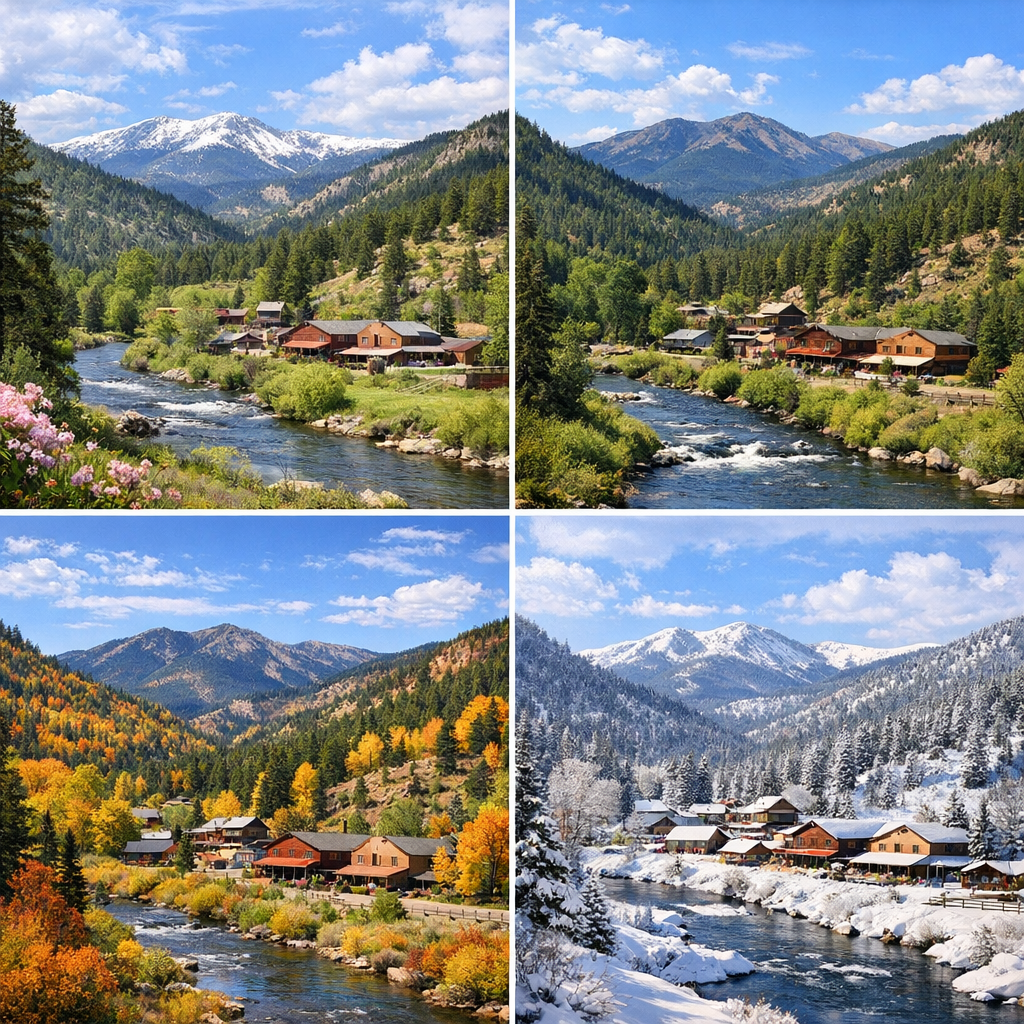
Bailey, Colorado, nestled in the foothills of the Rocky Mountains at an elevation of approximately 7,700 feet, experiences a diverse range of weather patterns throughout the year. Understanding these seasonal changes is essential for residents and visitors alike.
Winter: December to February
Winters in Bailey are characterized by cold temperatures and regular snowfall. December typically brings average highs around 33°F (0.5°C) and lows near 12°F (-11°C). Snowfall is common, with the town receiving around 8 to 10 inches of snow during this month. Residents should prepare for icy conditions and ensure their homes and vehicles are winter-ready.
Spring: March to May
Spring arrives gradually in Bailey, with lingering snow into April and the possibility of sudden storms. March often brings heavy, wet snowstorms, while April sees a mix of snow and rain as temperatures begin to rise. By May, the landscape starts to bloom, and the South Platte River runs high with snowmelt. Average temperatures in May range from highs of 59°F (15°C) to lows of 36°F (2°C).
Summer: June to August
Summers are pleasant, with warm days and cool nights. June sees average highs of 73°F (23°C) and lows around 47°F (8°C). July is typically the warmest month, with highs reaching up to 89°F (32°C). Afternoon thunderstorms are common, providing much-needed moisture and cooling relief. The relative humidity is lowest in June, averaging around 47%.
Fall: September to November
Autumn brings cooler temperatures and vibrant foliage. September starts with mild conditions, with highs around 70°F (21°C), gradually cooling to highs of 46°F (8°C) by November. The first snowfalls can occur as early as October, signaling the transition back to winter.
Environmental Considerations
Bailey’s unique climate and elevation contribute to its rich biodiversity and natural beauty. However, residents should be aware of environmental challenges. For instance, a pilot project conducted between February and September 2024 found that 42% of private wells tested in Bailey had PFAS levels exceeding the EPA’s maximum contaminant level for at least one type of PFAS. This highlights the importance of regular water quality testing and environmental stewardship.
Additionally, forest management plays a crucial role in protecting water resources. In October 2023, the Colorado State Forest Service completed a 299-acre project near Bailey to improve forest health and create effective fire breaks, safeguarding critical water resources and communities at risk of wildfires.
By understanding Bailey’s seasonal weather patterns and environmental factors, residents can better prepare for the year’s changes and contribute to the preservation of the area’s natural resources.