

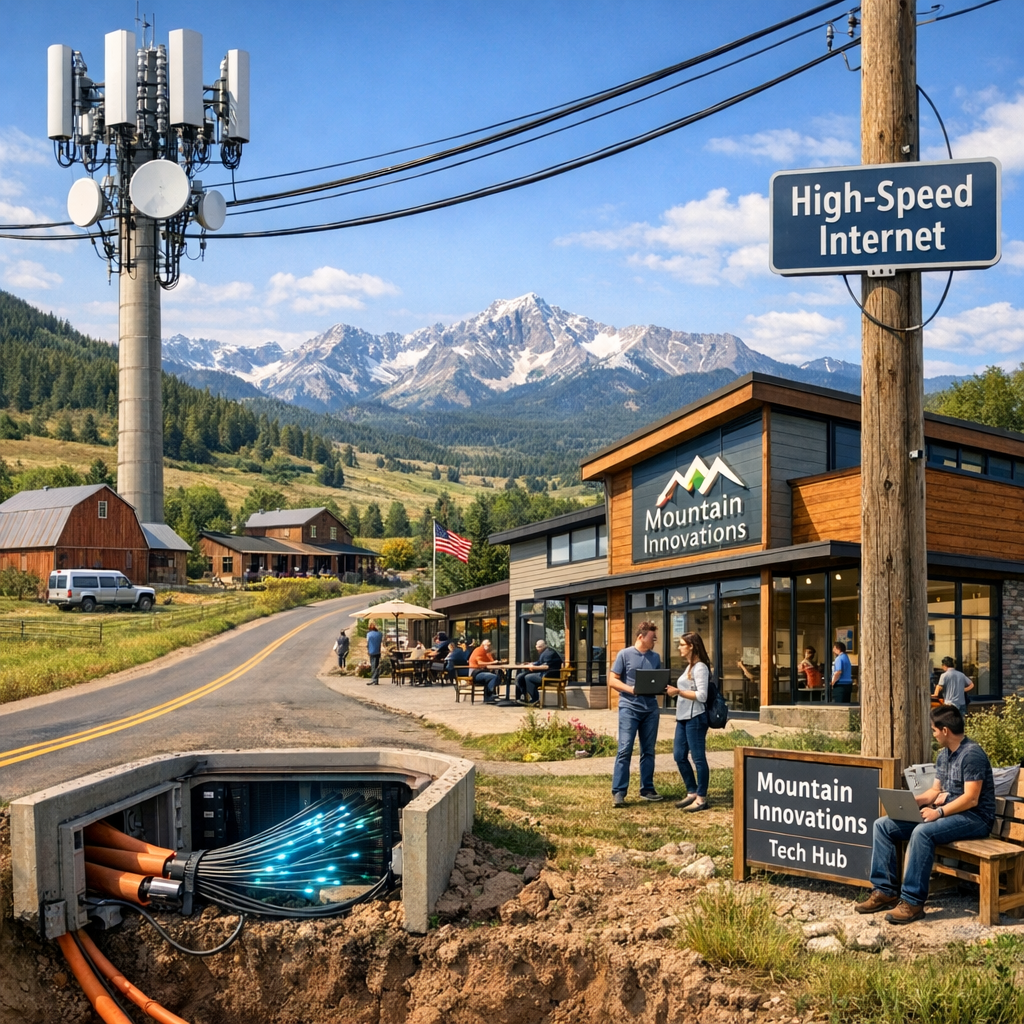
In the heart of Colorado’s mountainous regions, rural communities like Bailey are experiencing a technological renaissance. The advent of artificial intelligence (AI) and the emergence of tech startups are not only enhancing connectivity but also opening new avenues for economic growth and education.
Enhancing Connectivity with AI
Access to high-speed internet has long been a challenge for rural areas. Recognizing this, the U.S. Department of Agriculture awarded a $6 million grant to Yampa Valley Electric Association to expand broadband access in northwestern Colorado. This initiative aims to connect 264 homes, farms, and businesses, facilitating telecommuting, telemedicine, and modern entertainment options. Such efforts are crucial in bridging the digital divide and ensuring that rural communities are not left behind in the digital age.
AI Startups Making an Impact
Colorado’s tech landscape is vibrant, with numerous AI startups contributing to various sectors. For instance, Optimo AI, based in Denver, focuses on helping organizations adopt AI securely and scale with confidence. Their mission is to create a secure environment where people can thrive alongside AI technologies.
Another notable startup is Ridley, founded in Boulder. Launched in July 2025, Ridley aims to revolutionize the home-selling process by providing an AI-guided platform that allows homeowners to sell their properties without traditional real estate agents, thereby saving on commissions. This innovation empowers individuals by offering more control over significant financial decisions.
AI in Education
The integration of AI into education is also gaining traction. A study titled “Amplifying Rural Educators’ Perspectives: A Qualitative Study of Generative AI’s Impact in Rural U.S. High Schools” highlights how rural educators are using AI to streamline teaching tasks. However, the study also points out that existing resource disparities can restrict meaningful integration, emphasizing the need for rural-specific design approaches to reduce barriers rather than widen them.
Government Initiatives and Regulations
Colorado’s government is actively engaging with AI technologies. The state has introduced legislation to regulate AI-driven automated decision-making in critical areas such as employment, education, housing, healthcare, and financial services. This balanced approach aims to protect consumers while fostering innovation within the tech industry.
Moreover, Colorado is pioneering a “bullish with guardrails” strategy for incorporating AI into government operations. This initiative encourages the use of AI while placing firm limits on its application, particularly prohibiting its involvement in consequential decision-making processes. Such measures reflect a commitment to responsible AI deployment that balances innovation with public safety and privacy.
Looking Ahead
As AI and tech startups continue to flourish in Colorado, rural communities stand to benefit significantly. Enhanced connectivity, innovative business models, and educational advancements are just the beginning. By embracing these technologies and supporting responsible innovation, rural areas like Bailey can look forward to a future where technology serves as a bridge to greater opportunities and improved quality of life.