

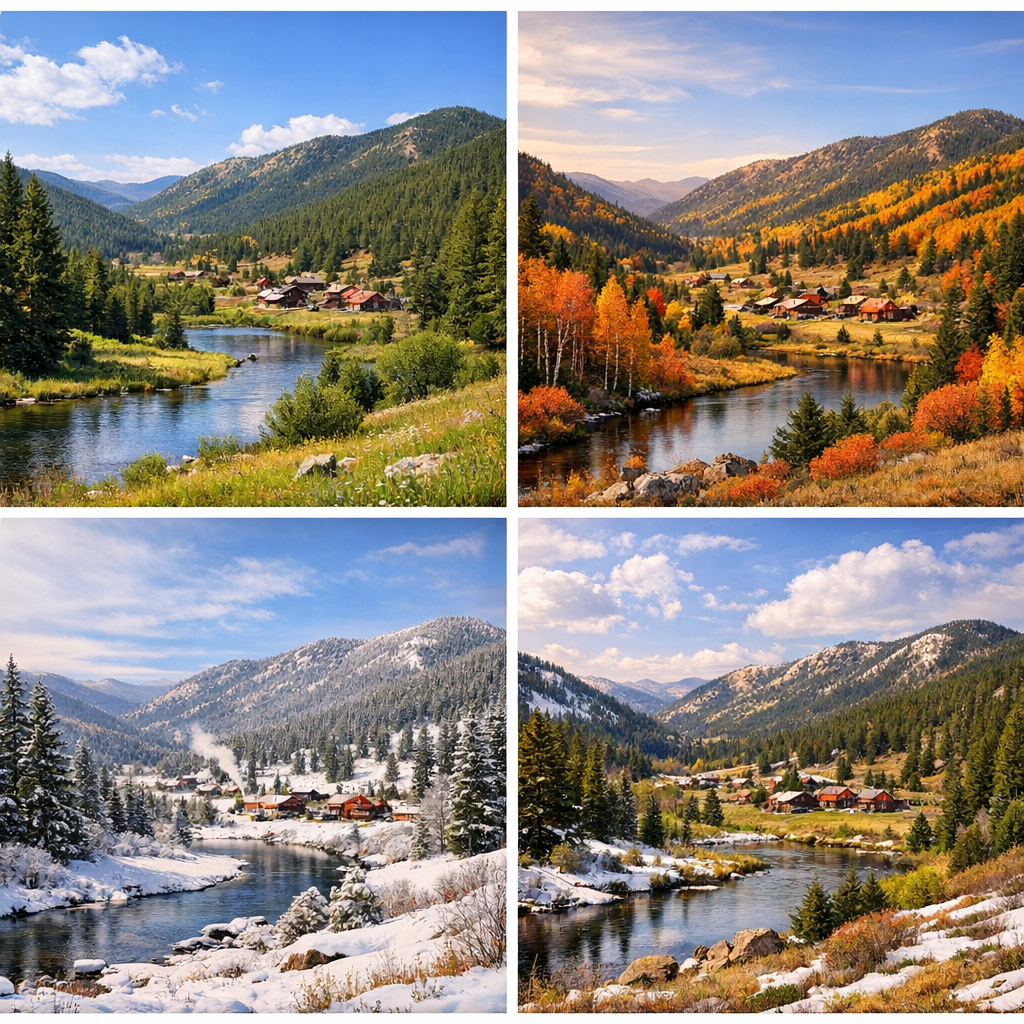
Bailey, Colorado, nestled in the foothills of the Rockies at an elevation of over 7,700 feet, experiences a humid continental climate characterized by cold, snowy winters and warm summers. Understanding these seasonal patterns is essential for residents and visitors alike.
Winter (December to February)
Winters in Bailey are cold, with average high temperatures around 34°F (1.3°C) in January, the coldest month. Snowfall is common, contributing to the picturesque winter landscape. Residents should prepare for icy conditions and ensure their homes are winter-ready.
Spring (March to May)
Spring brings a gradual transition from winter’s chill to milder temperatures. March often sees heavy, wet snowstorms, while April and May experience a mix of rain and snow. Daytime temperatures rise, but nights can still be cold. This season is marked by increased precipitation, supporting the blooming of local flora.
Summer (June to August)
Summers are warm, with July being the warmest month, averaging high temperatures around 76°F (24.5°C). Afternoon thunderstorms are common, providing much-needed moisture and cooling relief. Outdoor enthusiasts should be mindful of sudden weather changes and plan activities accordingly.
Autumn (September to November)
Autumn features cooler temperatures and vibrant foliage. September and October are particularly pleasant, with crisp air and clear skies. November sees a return to colder conditions, signaling the approach of winter. This season is ideal for hiking and enjoying the natural beauty of the area.
Understanding Bailey’s seasonal weather patterns allows for better preparation and appreciation of the unique climate in this mountainous region.